Source revision: c0492e874d9d-dirty
Judges and Officials Rules
Hockey Director
The Hockey Director is the head organizer and administrator of hockey events. The Hockey Director is responsible for the logistics and equipment for the hockey competition. The Hockey Director is in charge of keeping events running on schedule.
Board of Referees
Members Of The Board Of Referees

The Board of Referees consists of:
First Referee (1)
Second Referee (2)
Secretary (S)
Timer (T)
The Referees
The two referees are positioned on opposite sides. They try to stay close to the ball. They should not ride a unicycle. The clothes of the referees must be of different color than those of the players. Both referees are responsible for checking all violations of the rules and executing face-offs. The First Referee has additional tasks:
The First Referee overrules the Second Referee, if they disagree.
The First Referee (exception: face-off see Face-off) restarts the game after every interruption by a long blow of the whistle.
The Secretary
The Secretary sits at the desk and takes care that the scoreboard always shows the current score. After a goal the Secretary seeks eye contact with the First Referee to check if the goal is declared valid or not. After the end of the game the Secretary writes the final score into the report. When a player has been sent-off, all imposed penalties shall be noted by the secretary in the match record with the time, player number, type of penalty (2 min, 5 min, or match penalty) and cause of penalty. For match penalties, the secretary records the name of the player on both the completed match and the team’s next match and should inform the hockey director that the player must miss the teams next match.
The Timer
The Timer checks the time of play with a stopwatch and/or with a score board. The time is started whenever the referee starts the game by blowing the whistle. A period is considered ended at the onset of the scoreboard sound (e.g. horn, bell, gong) or the timer’s whistle begins. Each period is ended by the sound of the score board (e.g. horn, bell, gong) or the blowing of a whistle by the timer. The Timer also stops the time whenever the referee requests a stoppage of time. In the case of a send-off, the timer records the time of send-off and the time the offender or substitute player will be allowed back on to the field. The timer must also notify the sent-off player when they are allowed to rejoin the match.
Before The Game
Before the game, the referees assemble all players on the field (including substitutes). They check the following:
Are the colors of the shirts of the players clearly different?
Do all players fulfill the safety rules for clothing?
Is the ball suitable?
Are the unicycles and sticks orderly, without sharp, pointed or protruding parts that might injure others?
They explain to the players how strictly they will interpret the rules.
If necessary, they tell the players how long the game will be and also if there is extended time in case of a draw.
General
The game is interrupted by a short and loud blow of the whistle. If any players don’t hear the whistle, it is necessary to blow the whistle again. It is not possible to let the game continue after blowing the whistle.
The referees should set the tone through their positive and calm appearance. Decisions are explained upon request but they are not discussed with the players. In an unclear situation, the referees can ask the players before making a final decision.
Neither the referees nor the Timer or Secretary may be distracted from the game. Most of all, they must not talk with the spectators during the game.
If two violations of the rules occur back-to-back, only the first one is penalized. Exception: Unsporting behavior should be penalized even after the game has been interrupted.
After a goal, the referee waits until both teams are back in their own halves and ready to continue. Only then, the First Referee starts the game by blowing the whistle.
To apply the advantage rule, the referee makes the normal sign for a free shot with one arm pointing in the direction of play of the team who has the advantage. In addition, the referee may shout “Advantage” or “Go ahead!”, but does not blow the whistle. The end of advantage play should be signified, either by blowing the whistle to give a free shot for the original foul in the case where no advantage was gained, or by lowering the arm again and/or shouting “Advantage over”.
After each interruption of the game the referee briefly explains the decision. In addition the corresponding hand sign is shown.
When two or more players fall and it is unclear whether a foul occurred, the referees can interrupt the game and then continue it with a face-off. This prevents more players being drawn into the situation.
The referees shall suspend the game in any instances where an unforeseen interruption may influence the course of the game, e.g. an injury occurs, multiple balls on the field, or unauthorised access to the field. Afterwards, a free shot is given to the team that was in possession of the ball at the time of the interruption. If it is unclear who was in possession, the game is continued with a face-off.
If a referee is hit by the ball, the game is only interrupted if the contact has changed the course of play to benefit either team. In this case, the game is resumed with a face-off.
Referee Hand Signs
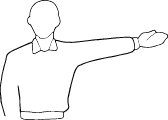 |
“Free shot” Point with the extended arm in the direction of play. This sign is also used to indicate the advantage rule. |
|---|---|
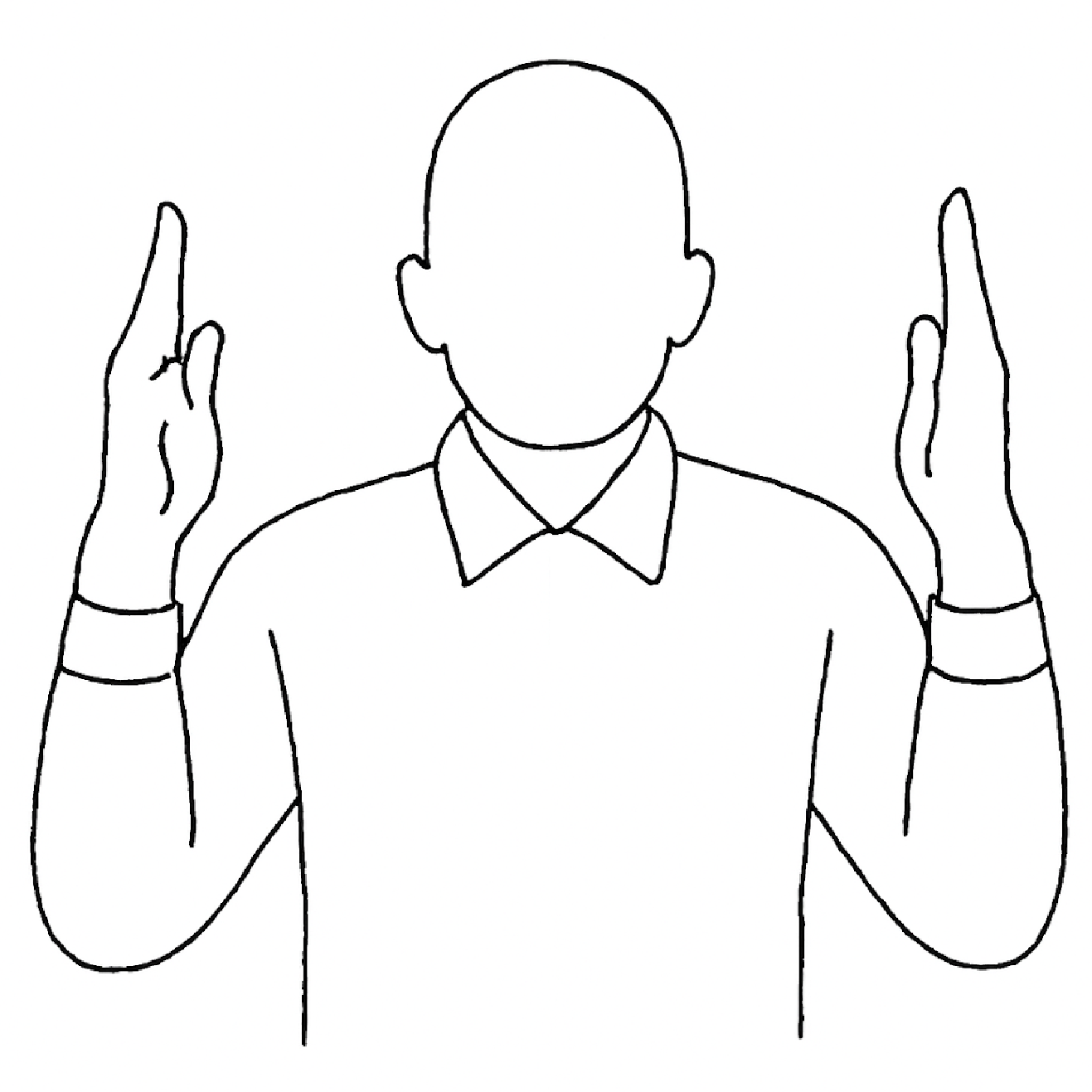 |
“Free shot distance violation” Both forearms are held vertically shoulder-width apart in front of the body. Fingers point upward, palms facing each other. Used when a defender or their stick is less than 2 meters from the ball during a free shot (see Free Shot Free Shot). |
 |
“Face-off” Hold both thumbs up. |
 |
“6.5 m” Point with the index finger to the 6.5 m point. |
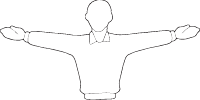 |
“No Foul” Extend both arms horizontally. This sign is used to indicate that there was no foul in a critical situation. It is not used in conjunction with a blow of the whistle. |
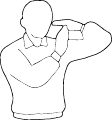 |
“Stop Timer” Form the letter “T” with both hands. The stoppage of time is deemed necessary by a referee for example if a player is injured, intentional delay of game occurs or discussion between referees or between referee and players is needed. |
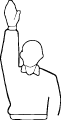 |
“Goal” Point upwards vertically with one arm. The referees should check here that the secretary notes the goal. To control this it may be useful for the referees to write down the score themselves. |
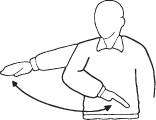 |
“No goal” Move the flat hand horizontally (palm pointing down). With this hand sign a goal shot is declared invalid. This is for example the case if the ball was last touched by hand or arm, in case of a long shot, if the ball entered the goal through the net from the outside, or if the game had already been stopped before the ball entered the goal. The referees should check here that the Secretary does not inadvertently count the invalid goal. |
 |
“High stick” Hold clenched fists next to each other above the head. |
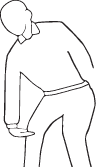 |
“SUB and SIB” Hit your shinbone with the edge of your hand. |
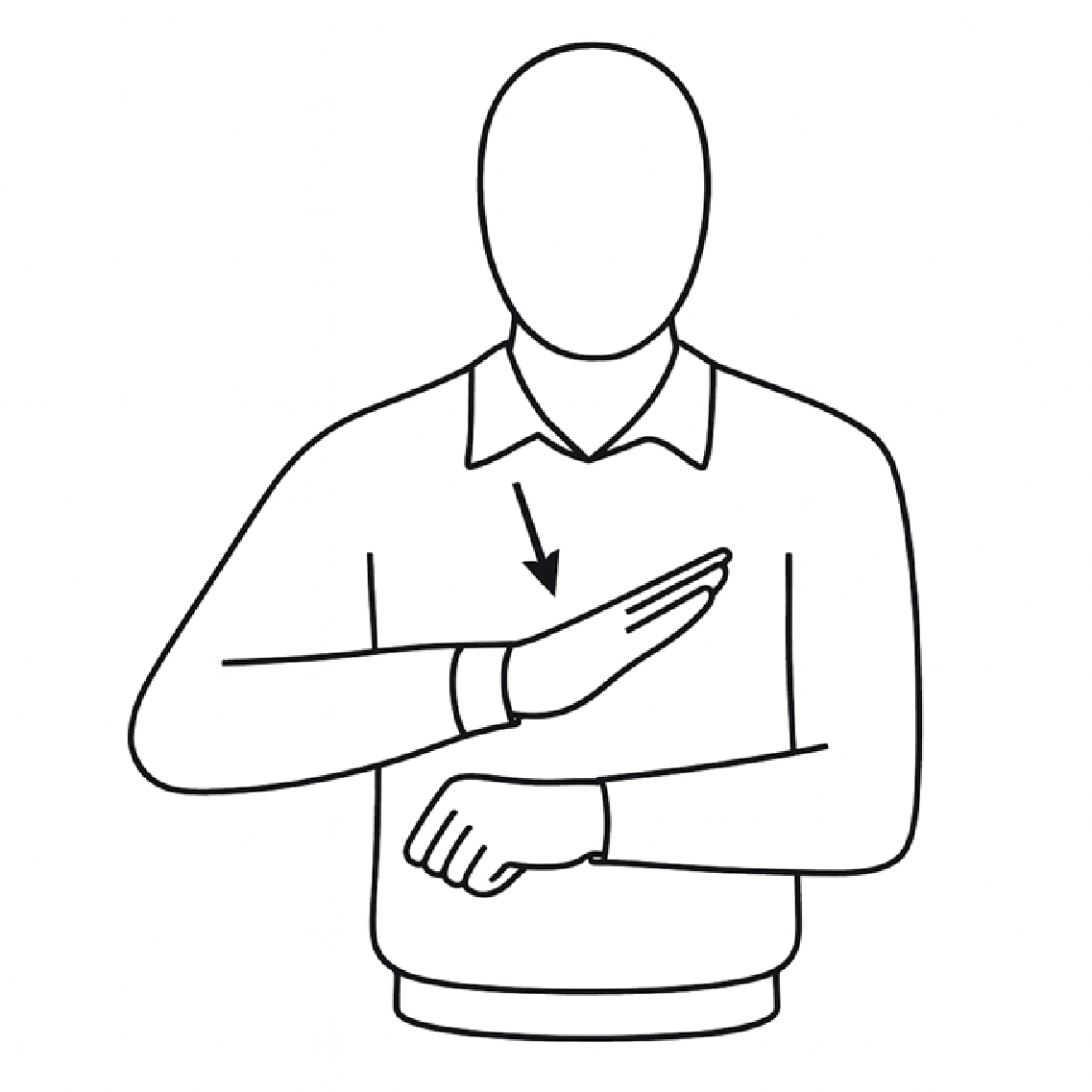 |
“Slashing” A chopping motion with the edge of one hand across the opposite forearm. |
 |
“Obstacle” Cross arms in front of the chest. |
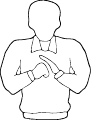 |
“Body contact” Strike the clenched fist of one hand into the open palm of the other hand directly in front of the chest. |
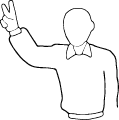 |
“Penalty box for 2 minutes” and also “Two consecutive plays with the hand” Spread and raise two fingers. |
 |
“Penalty box for 5 minutes” Spread and raise five fingers. |
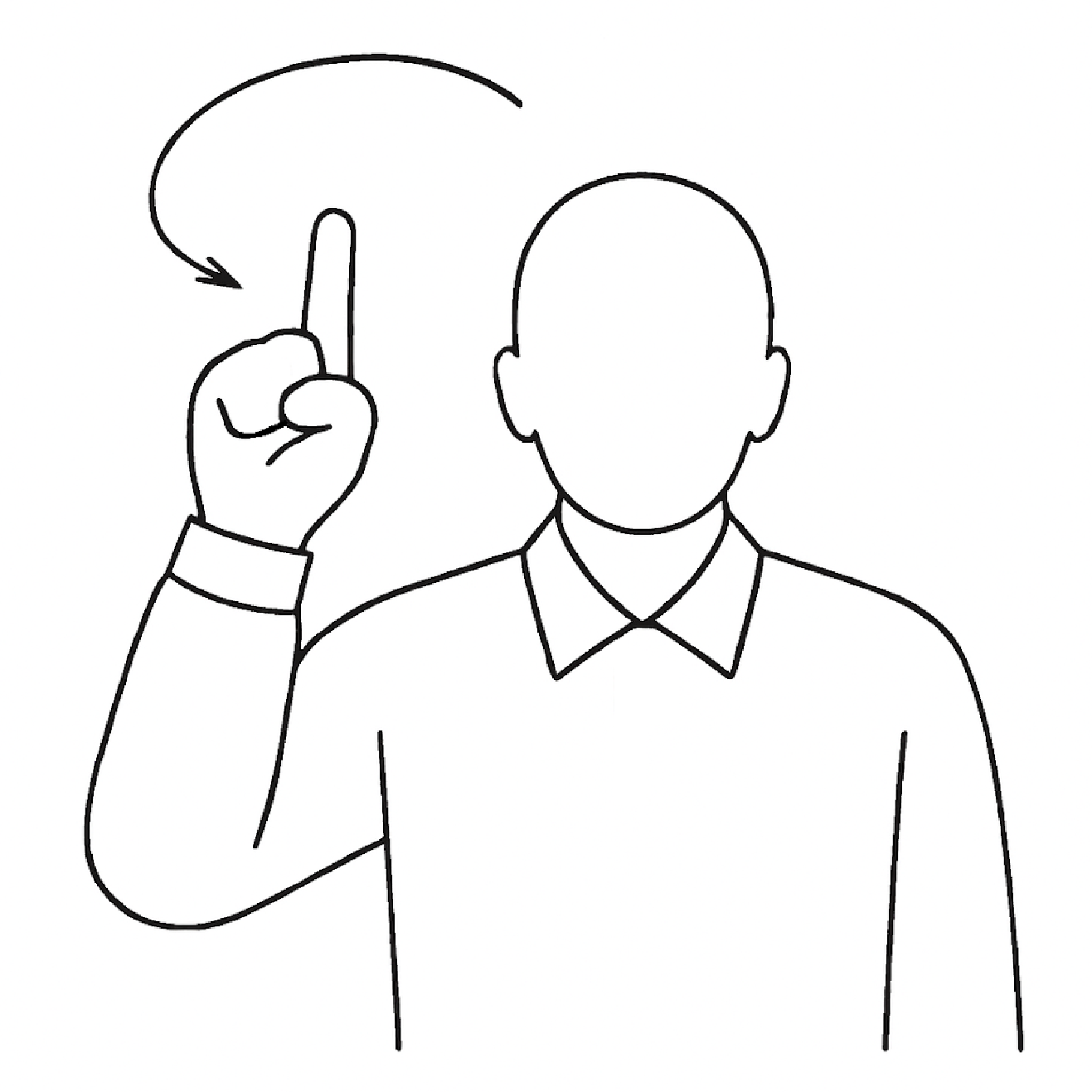 |
“Delay of game” One arm is held up vertically the index finger points up and the hand makes a rotating movement. For use, see Delay Game Intentional Delay Of Game. |